
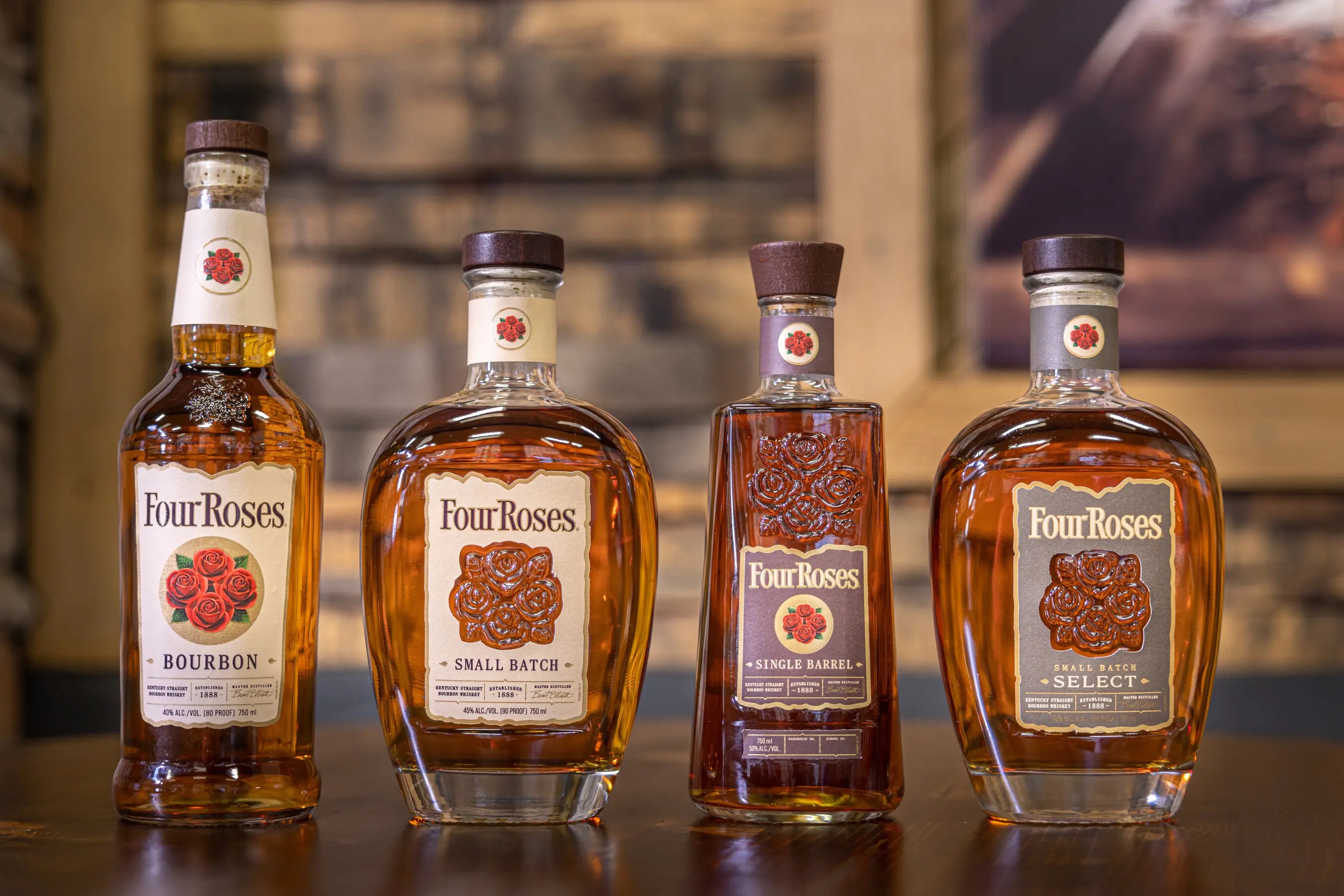
The Gallo acquisition is the biggest bourbon deal in years — and the implications run deeper than the price tag.
On April 2, 2026, E. & J. Gallo Winery officially closed its $775 million acquisition of Four Roses Bourbon from Japan’s Kirin Holdings. The deal had been in the works since February, when Kirin announced it was selling the Kentucky distillery as part of a broader portfolio realignment. By the time the papers were signed, the bourbon world had already spent two months processing what it meant.
The short answer is: a lot. This isn’t just a corporate transaction. It’s a story about ownership, identity, and where the bourbon industry is heading — and it deserves more than a press release summary.
The Brand That Kirin Built
To understand why this sale matters, you have to appreciate what Kirin actually accomplished with Four Roses. When the Japanese beverage giant acquired the distillery in 2002, Four Roses was already a storied name — established in 1888, built on a distinctive production philosophy that combined two mashbills with five proprietary yeast strains to yield ten distinct bourbon recipes. But domestically, the brand had been largely invisible for decades. Seagram, which owned Four Roses from 1943 until its collapse, shipped most of the juice overseas while the American market barely knew the label existed.
Kirin changed that. Over the course of more than two decades, the company invested in the brand’s American identity, leaned into the complexity of its production process, and built Four Roses into something genuinely premium. The result speaks for itself: a distillery available in over 83 countries, a reputation for consistently award-winning releases, and a loyal following among enthusiasts who can actually explain what OBSQ or OESV means and why it matters. Four Roses earned a World’s Best Single Barrel designation at the World Whiskies Awards. That doesn’t happen by accident.
So when Kirin announced it was selling — citing a desire to reallocate resources toward businesses that better leverage its own organizational capabilities — it wasn’t a statement about Four Roses’ performance. It was a statement about Kirin’s priorities. The brand wasn’t broken. It was just ready for a new chapter.
The Price Tag and What It Tells Us
$775 million. Let that number sit for a moment.
That figure — which includes up to $50 million in contingent payments tied to post-sale revenue targets — represents a new benchmark for what a Kentucky distillery is worth at the top of the market. It reflects not just the Four Roses brand, but its physical assets: the distillery and visitor center in Lawrenceburg, the bottling and warehouse facility in Nelson County, the barrel inventory aging quietly in rickhouses across the Commonwealth.
For context, Gallo is the largest wine supplier in the United States by volume. This is not a company that overpays. When they agreed to nearly three-quarters of a billion dollars for a bourbon brand that ranks eighth globally in sales volume, they were making a statement about where they believe the category is going — and how much they want to be part of it. Their previous move into American whiskey, a strategic investment in Horse Soldier Bourbon in 2022, was a toe in the water. Four Roses is a cannonball.
What Gallo Brings to the Table
Here’s where the conversation gets genuinely interesting, and where bourbon fans should pay close attention.
Gallo is a family-owned company based in Modesto, California. It was founded in 1933 by Ernest and Julio Gallo, and it has remained under family control ever since. When the press releases trumpeted that Four Roses was returning to “U.S. family ownership for the first time in 83 years,” that framing was deliberate — and not inaccurate. Gallo is not a hedge fund. It’s not a multinational conglomerate optimizing quarterly earnings. It’s a company with a multi-generational perspective on brand building.
That matters in spirits, where the best products are measured in decades, not quarters.
What Gallo has demonstrated across its wine portfolio is an ability to operate at scale without killing what makes individual brands worth buying. They’ve managed everything from mass-market table wines to higher-end labels, and while their approach isn’t universally beloved among connoisseurs, their track record in distribution and global market development is undeniable. That’s exactly the muscle Four Roses needs to reach its next level.
Chief Commercial Officer Britt West was candid about the growth strategy in post-deal interviews. He acknowledged that not every bourbon consumer wants to decode the intricacies of five yeast strains and two mashbills — and that there’s significant room to grow awareness and trial among drinkers who’ve never encountered the brand. That’s not a plan to dumb Four Roses down. It’s a plan to widen the door.
What Stays the Same
If you’ve been drinking Four Roses for years and you’re worried about your next bottle tasting different, Gallo has been consistent and specific about its commitments: the liquid doesn’t change, the production process doesn’t change, and critically, the people don’t change.
Master Distiller Brent Elliott is staying. This is not a small thing. Elliott has guided Four Roses since 2015, and he’s the steward of the distillery’s distinctively complex production philosophy. His presence signals that Gallo understands what they bought — and understands that the value of Four Roses is inseparable from the expertise and craft that produced it.
Elliott himself described the acquisition as “a meaningful milestone” in the distillery’s 138-year history, and expressed genuine enthusiasm for the alignment in values between the Four Roses team and their new ownership. That’s not just PR boilerplate. When a master distiller publicly endorses a new owner, it carries weight.
The entire existing team is reported to be staying in place, which means institutional knowledge stays intact. The recipes stay. The rickhouses stay. The ten distinct bourbon expressions that define the brand’s identity stay. What changes is the scale of the platform behind them.
The First New Release Under Gallo
The most immediate tangible change coming out of the acquisition is also the most telling signal about Gallo’s intentions: a 100-proof expression, expected to hit shelves sometime in April or May 2026.
This is significant for a couple of reasons. First, it suggests Gallo moved quickly — or that this release was already in the pipeline and they’re simply the ones launching it. Either way, it demonstrates forward momentum rather than a period of organizational paralysis while new ownership gets its bearings.
Second, 100 proof is a statement. At a time when the premium bourbon segment has increasingly gravitated toward cask strength and high-proof expressions, bringing a clean 100-proof bottling to the lineup signals confidence in the liquid itself. It’s not a gimmick. It’s not a hype play. It’s a proof point.
Watch this release closely. It’s likely the first real indicator of how Gallo will approach product development under their ownership — and whether the commitments to continuity are operational reality or just messaging.
Reading the Room: Bourbon’s Big Picture
This acquisition doesn’t happen in isolation. It’s part of a broader story about where the American whiskey industry is right now.
Bourbon has spent the last decade riding a wave of premiumization and global demand. Distilleries that were barely viable fifteen years ago are now valued at sums that would have seemed absurd. But the category is also facing headwinds: ongoing trade disputes have complicated exports, economic pressures have softened demand in some key markets, and the post-pandemic buying frenzy has largely settled into something more sustainable.
In that environment, the brands that will thrive are the ones with real production assets, genuine quality credentials, and distribution infrastructure capable of reaching global consumers. Four Roses has all three. What it lacked was a U.S.-based owner with the capital and commercial reach to fully exploit those advantages.
Gallo checks that box. And the fact that they’re willing to pay $775 million in a period of industry consolidation and uncertainty says something about their conviction in the category’s long-term trajectory.
The Skeptic’s Corner
Not everyone is celebrating, and that’s fair.
Any time a beloved craft-adjacent brand changes hands — regardless of the assurances — the community holds its breath. The history of the spirits industry includes plenty of acquisitions where “nothing will change” turned out to mean “nothing will change right away.” Integration takes time. New ownership brings new priorities. Margins get examined. Sourcing decisions get revisited.
Gallo is primarily a wine company expanding into spirits. That’s not a disqualifying fact, but it does mean their institutional expertise is being applied to a category they’re still learning at scale. Horse Soldier Bourbon, their previous American whiskey investment, has not exactly become a household name. The question is whether Four Roses — a brand with far more momentum, heritage, and global recognition — will get the full benefit of Gallo’s distribution muscle without suffering the consequences of corporate drift.
The 100-proof release and the retention of Brent Elliott are encouraging signals. The public commitment to continuity is encouraging. But this story is still being written, and bourbon drinkers are right to watch carefully.
What to Actually Do Right Now
A few practical thoughts for Four Roses fans navigating the transition:
Don’t panic-buy. There’s no indication of any disruption to supply, production, or the existing lineup. The distillery is running. The team is in place. Your Yellow Label isn’t disappearing.
Pay attention to the 100-proof release. This will be the first real product decision under Gallo’s watch. If it’s good — and it very likely will be — it’s a positive sign. If it feels like a cash-in on current high-proof trends without the quality to back it up, take note.
Keep engaging with the brand. If you’re the kind of consumer who cares about independent, craft-oriented bourbon culture, your continued engagement with Four Roses — and your vocal appreciation for what makes it distinctive — matters. Brands respond to what their most passionate consumers celebrate.
Stay curious about what comes next. The 138-year history of Four Roses is full of ownership transitions, strategic pivots, and reinventions. What Kirin built between 2002 and 2026 is genuinely impressive. What Gallo builds between 2026 and whenever is an open question — and an interesting one.
The Bottom Line
Four Roses is one of Kentucky’s most genuinely distinctive distilleries. Its production philosophy — ten recipes, two mashbills, five yeast strains — is not a marketing construct. It’s a real commitment to complexity that produces real results in the glass. Kirin spent 24 years and significant capital building that reputation. Gallo is betting $775 million that the next chapter is worth writing.
For once, the cautious optimism seems earned. The right people are staying. The right commitments have been made. And the brand’s underlying quality is strong enough to survive a bad owner — which Gallo, by all available evidence, is not.
The bourbon is still bourbon. The distillery is still in Lawrenceburg. Brent Elliott is still the master distiller.
Everything else is a story we’re just beginning to tell.
The Bourbon Road covers bourbon culture, distillery news, and industry developments weekly. Subscribe wherever you get your podcasts.
The Conversation