
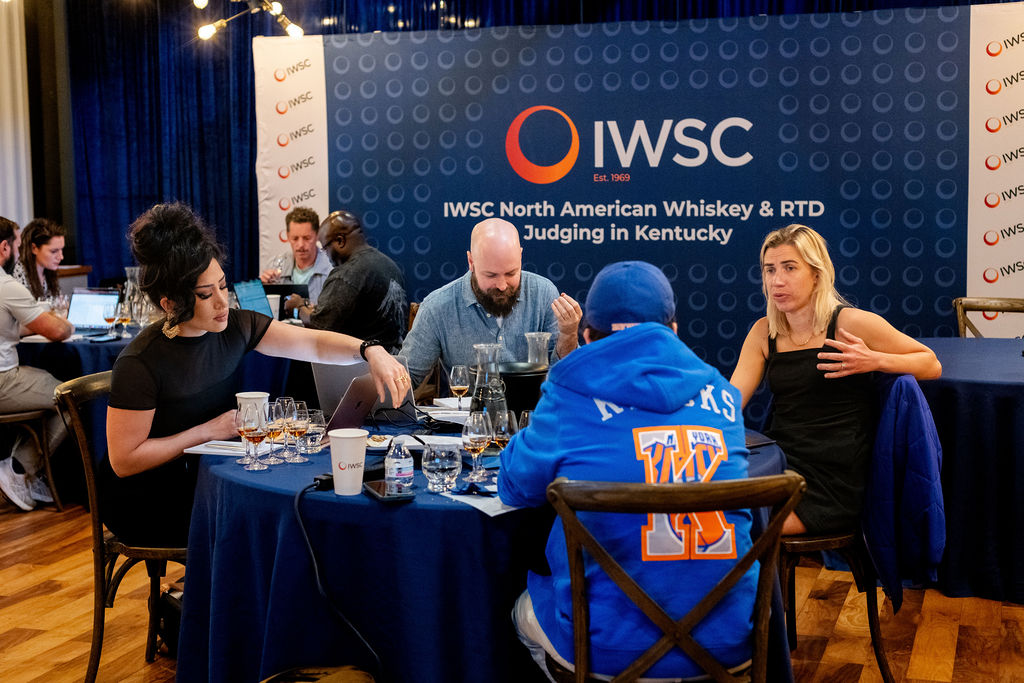
The International Wine & Spirits Competition — the 57-year-old contest the trade likes to call “the Olympics of the drinks industry” — brought its North American judging to Bardstown this year, and the Bourbon Capital of the World returned the favor. When the results dropped on June 16, the single highest-scoring spirit in the entire field was a Kentucky bourbon.
Over two days of double-blind tasting on June 4–5, 2026, international panels worked through North American whiskey, rye, gin, vodka, rum, tequila, RTD and liqueur entries. Out of everything submitted, only five spirits earned the top honor of Gold Outstanding — a score between 98 and 100, handed to just 1.3% of entrants. Here is the entire list:
- 99 points — Lochs of Jura Barrel 10 Year Old Bourbon, Bardstown Bourbon Company
- 98 — Old Bardstown Bottled in Bond 4 Year Old Kentucky Straight Bourbon, Willett Distillery
- 98 — 8 Year Blended American Malt Whiskey, Coors Spirits Company
- 98 — Banter White Rum, American Cane
- 98 — Gold Miner Barrel Reserve Platinum 10 Year Old Rum, Desert Diamond Distillery
Three American whiskeys and — for the first time in the competition’s history — two American rums. That the rums crashed the party was the talk of the room. “I’m really excited about what’s happening in America right now with rum,” said Dawn Davies, MW, Commercial Buying Director at The Whisky Exchange. “That was a standout surprise to me, and honestly, some of the rums were absolutely fantastic.”
But the number that matters most to us sits at the top of the list. That 99 belongs to Bardstown Bourbon Company, which has been stacking hardware for a couple of years now and just put a single point between itself and a perfect score. Lochs of Jura Barrel 10 YO is a collaboration aged in the spirit of its Scottish island namesake, and the good news for anyone who wants to chase the highest-rated American whiskey of the year is that it’s slated to hit retail later this summer.
Right behind it, Willett landed a 98 with Old Bardstown Bottled in Bond — a four-year, 100-proof, bonded Kentucky straight that costs a fraction of most bottles on this page and is, quietly, one of the better value plays in the state. The third whiskey is the curveball: an eight-year blended American malt from Coors Spirits Company, the same Coors you’re thinking of, now several years into a serious whiskey program.
One rung down, in the Gold tier (95–97 points), the names get familiar fast. Frey Ranch’s 10-year Inaugural Batch and Heaven Hill’s Kentucky Beau both notched 97. Four Roses Small Batch Select and W. L. Weller Antique 107 each took 95 — proof that a bottle you can actually find on a shelf can still hang with the trophy hunters. They were among 44 Gold medals overall, with another 176 Silvers spread across the categories.
The IWSC has set the benchmark for this kind of thing since 1969, judging more than 12,000 entries a year from 90-plus countries through blind panels of Masters of Wine, Master Sommeliers and master distillers. The low medal rate is the whole point — a Gold Outstanding is described as “an outstanding spirit with a naturally exceptional balance, complexity and power.” Davies left the week bullish on where the home team is headed: “The future looks very exciting for U.S. whiskey... some whiskeys that were super balanced with some really great oak integration, particularly within the Bourbon and Rye categories.” That tracks with where we see bourbon going in 2026.
Top scorers now advance to the Trophy Judging round, with winners revealed at the IWSC Awards Celebration in London this November. You can browse the full North American results at IWSC, and The Whiskey Wash has the complete bourbon and American whiskey medal list if you want to see who else made the cut. Not a bad showing for a competition that came to bourbon’s backyard and watched bourbon win.
The Conversation