474. Grain-to-Glass in North Carolina: Southern Distilling's Story
Pete Barger of Southern Distilling pours three grain-forward gems: a bonded Abruzzi rye, a honey cask bourbon, and a standout American single malt.

Reviews
Show Notes
Jim Shannon and Todd Ritter welcome Pete Barger, co-founder of Southern Distilling Company (and its contract arm, Statesville Contract Distilling) in Statesville, North Carolina, for a deep dive into grain-forward American whiskey made the old-fashioned way. Pete walks through the distillery's origin story — from a mere 275 DSPs in the U.S. when they launched to today's 3,000-plus — explaining how an engineering background and a desire to build at scale led to one of the South's most quietly influential contract distillers. The conversation moves from field to glass, covering 5,000 acres of locally contracted grain, open-top fermentation, continuous grain-on distillation, palletized warehouse aging, and the terroir-driven philosophy that sets every bottle apart.
On the Tasting Mat:
- Southern Star Bonded Straight Rye Whiskey: A bottled-in-bond straight rye bottled at 100 proof, aged 6–7 years, made from a 51% rye, 39% corn, 10% malted barley mash bill using heritage Abruzzi rye grown within 20 miles of the distillery. Entered the barrel at 105 proof. Floral and approachable with honeyed tea, ginger, buttery rye muffin, and a gentle peppery finish. MSRP $49.95 for a 750ml. (00:03:01)
- Southern Star Cask Strength Straight Bourbon Whiskey — Finished in Honey Cask: A limited-time offering bottled at 108.3 proof, finished for 5–8 months in barrels previously used by a local apiary to age honey. The underlying bourbon is a 70% corn, 16% wheat, 14% malted barley wheated mash bill. Rich butterscotch, Werther's candy, creamy mouthfeel, and a sweet honey note that supports rather than overwhelms the bourbon. Sold in 375ml bottles at $49.95. (00:20:40)
- Southern Star American Single Malt — Second Release: Bottled at cask strength (114.8 proof), aged approximately 6 years in a blend of new, second-use, and third-use oak barrels. Made from 100% locally grown and malted barley distilled grain-on in a continuous process — a distinctly American approach to single malt. Vibrant fruit-forward nose of green banana, ripe apple, and poached pear with a full, grain-rich palate and lush texture. (00:34:42)
Pete Barger pulls back the curtain on what it truly means to be a craft contract distiller — supporting over 180 brands under NDA while quietly stacking awards — and makes a compelling case that the future of American whiskey runs straight through the grain fields of the Carolina Piedmont. Whether you're chasing a bottle of the sold-out honey cask LTO or hunting for the single malt that converts Scotch skeptics and bourbon purists alike, Southern Distilling is worth the detour off I-77.
Full Transcript
Hello, friends, and welcome back to another episode of the Bourbon Road podcast. I'm your host, Jim Shannon, and I'm your host, Todd Ritter.
We've got a great show for you today, so grab your favorite four and join us. All right, listeners, welcome back to another episode of the Bourbon Road. We've got a special guest tonight with us. Jim, who do we got?
We've got Pete Barger from Southern Distilling. That's right. And I'm trying to remember the name of the town you guys are in.
So we're in Statesville.
Statesville, yeah.
Yeah. And that's, we get this a lot, we get a little confusion sometimes. So Southern Distilling Company is a parent company and the Statesville Contract Distilling is our contract distilling entity. So.
Got it. And Statesville's got a long history, uh, in the spirits world.
It does. It's a long and forgotten history. Um, but, but you know, one thing I say is that this is a, this is an industry that loves its stories. We got lots and lots of stories and like two of them are true. So when you get one of those histories, it's real, it's, it's always more interesting. And so, yeah, going back to the, uh, The 18th, 19th, and early 20th century Statesville was at one point in time, believe it or not, called the liquor capital of the world. We had a ton of federally permitted distilleries, a ton being 456, I think. federally permitted distilleries operating up until 1903. We had six big rectification houses here and those distilleries were feeding into the rectifiers. And the thing that grew the industry or drove it was transportation. We had a lot of rail here. We also grew a lot of grain, and so we had all of the things that were necessary to grow that industry. And it got to be a pretty big deal at one point, up until the point in time that we became one of the very, very earliest targets for Prohibition. I guess we were doing too good a job.
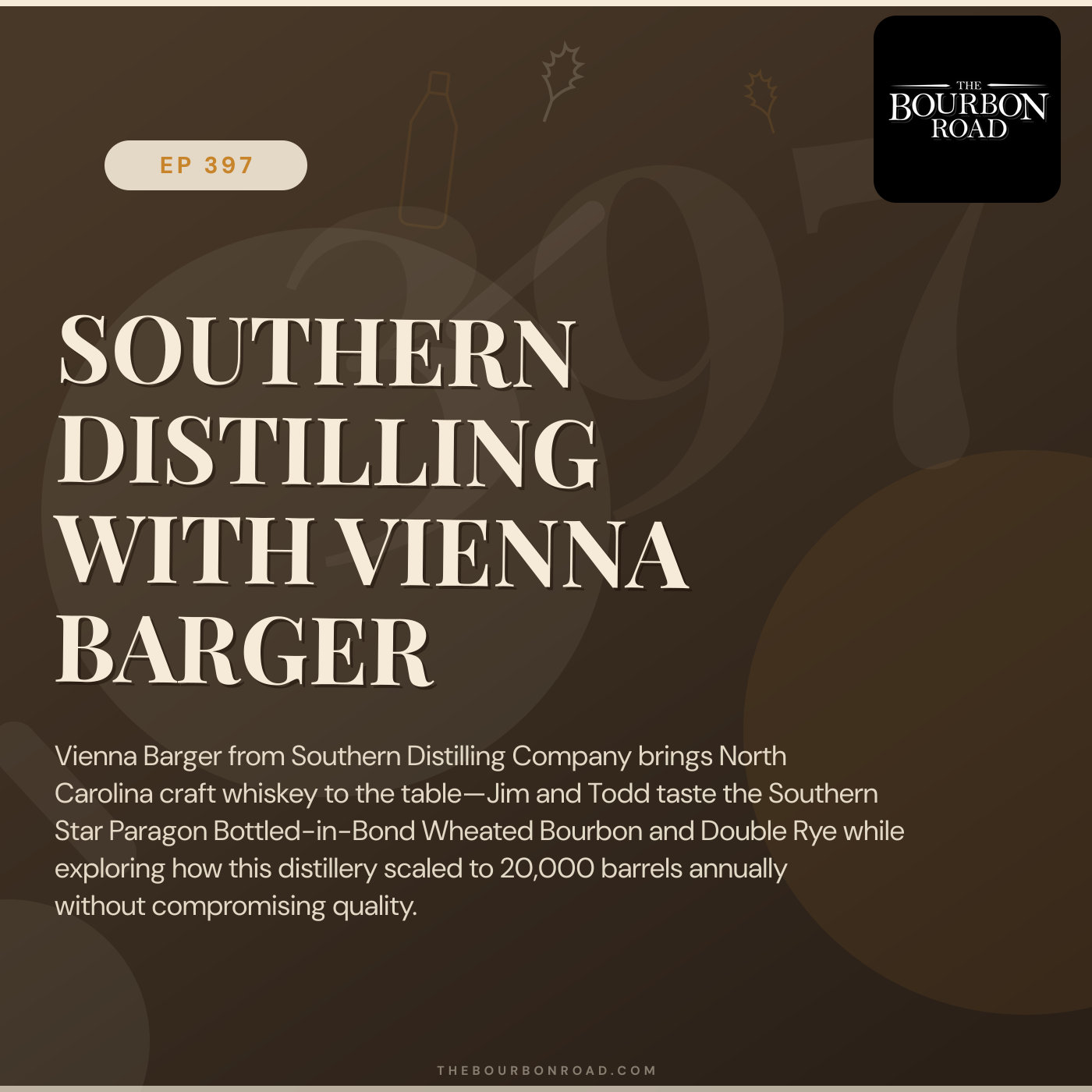
Well, it's great to have you guys back on the show. Your wife was with us probably somewhere around 100 episodes or so ago. Episode 397, actually. 397. Okay. So maybe not quite a hundred, but we're getting there. Uh, it was great to have her on and we're so, so glad to have you with us tonight. So we're really looking forward to going through these whiskies with you and having you bring us up to date on what's going on in your neck of the woods.
No, I appreciate it. Looking forward to it. Like I said, it's cocktail hour, so no time like now to dig in.
All right. So, uh, what, what's our order tonight, Pete, we've got these three wonderful bottles in front of us. Uh, what are we going to drink first?
So I think that, you know, we've got three products here. Um, you guys have a new release, uh, it's a ride bottle and bond. That one's really pretty interesting and one that I just, you know, I guess it's like kids, you love them all, but this one is right now one of my personal favorites. But let's start with that one and then we can move on to the LTOs that we have.
Okay, sounds good.
I'm gonna turn around from the camera and grab my bottle so I can enjoy a little pour with you. So this is the, here's the package. Nice, pretty. Everybody does green and we said, hey, let's be a little different. So we went off a script a little bit and did that blue label for rye. But this is a bottled and bond rye. One thing that's interesting about this rye is that We grew all the grain here locally. So the corn, the rye, the barley that was malted, this was all produced right here locally within 20 miles of Statesville, North Carolina. So that's one thing that makes us a little different, particularly as a contract distiller is that we've got about 5,000 acres of grain in production. It's, you know, I think that right now we're doing a 70, 16, 14. So all of the corn and all the wheat, so 86% of that mash bill we produced. So 100% of the rye, 100% of the corn. We've kind of outgrown our rye and barley capacity, so we are bringing a little bit of Of those grains and, but, you know, the other thing about that is, is that, you know, we're kind of growing all those grades away. We used to. So I say used to, back before the advent of commercial ag and petroleum-based fertilizers, et cetera, became really prevalent. So this is what we would call today very sustainable, right? So it's, again, it's kind of like going back to the future. We're growing it the way that we used to. But the mash bill, Uh, guys is, uh, well, why don't you sip it first before I give you all the secrets? Tell me what you think.
Okay. Well, I was hitting the nose first and I really like it. It, uh, it comes, it comes across. Now is this, it's a bottle and bond, but is it more, is it more, uh, a four year more, a six year more than eight years?
Well, I think that all of this product is between six and seven in this particular.
Six and seven, okay.
Yeah.
I think the first thing that pops out to me is like a kind of a honeyed tea note. A little ginger, a little rice spice.
Yeah, I'm getting the ginger, Todd, and I'm also getting like a buttery, a little bit of a buttery rye muffin kind of. Muffin, yeah. They're floral. It does have a nice serial note to it.
So one thing about our rye is that we use historically an Abruzzi rye, which is an older heritage rye, a little different than the Brissetta, which is more prevalent there in Kentucky. But particularly in this, this is all Abruzzi rye. We've got Brissetta that we're kind of blending in now. But that Abruzzi, from a distilling perspective, It yields about the same and behaves very similarly, almost imperceptibly similar to a brissetta. But it produces some different flavor notes and nuances that are just, I think, markedly different. And Todd, I think you hit it. You used the word floral. And that's one adjective that I think that a lot of people would kind of ascribe to our rye is that they are more floral. They're a little less spicy. And that's partially by design and partially a function of that Abruzzi rye. So, anybody want to venture a guess on a match bill? I know it's always next to impossible.
Actually, I saw it. So, I think it's $51.3910. Is that right? Yeah, that's right.
So, it's a barely legal ride.
I did my homework a little bit, I guess.
Yeah. So, that's always been a match bill that I am personally fond of. Even though most of what we do is in the contract space, the products that we're trying tonight are, it's our Southern Star brand, which we kind of use as a way to demonstrate our capabilities and the quality of our products. So many of our customers work with like 180 different brands and customers, but we're under an NDA with most of these, so we don't really get to talk about it. So our brand becomes kind of the mouthpiece to say, hey, this is what we can do and this is how we do it. So we're not going to hold back any secrets. We won't tell you just about everything about these products.
You get to come out of your own shadow kind of.
Yeah, which is really fun, right? It's really fun. But, you know, one of the things, again, that, you know, we get to do is we get to make products we like when we're doing it for ourselves. And that 51-39-10 has always been one of my go-tos.
I think you hit that on the head, Jim. It's still got that buttery rye muffin kind of thing. Still getting some honey notes. A little bit of peppery spice on the tail end, just to let you know it is a rye.
But it's not overpowering.
Right. And it doesn't have that, you know, some of those ryes you get will have that kind of little mint for it. And I think that's probably that other, maybe that comes from the other rye you were talking about. That's kind of used predominantly. Yeah.
Yeah. So the Abruti thrives in a warmer environment, a warmer climate. We grow a lot of it in North Carolina. And if we go back to those earlier days of distillation, you know, bourbon was still kind of not widely known, not as widely known as corn whiskey, which one could argue was technically bourbon. In some cases it was, in some cases it wasn't. But then the, you know, the higher end distillate of the time was rye. grown up and down the East Coast. It was a prevalent crop. And then over time, we saw that rye being displaced by corn and other crops. But this is still a great environment to grow rye. We just don't think about it, but it's a different variety. What's interesting is that most of this rye that's grown in North Carolina today gets sold for, I shouldn't say landscaping, but soil erosion. So if you got like a highway project, something like that, this rye will come up and overwinter really, really nicely. Whereas other grasses, warm season grasses will not. So most of our rye crop ends up going literally planted along the sides of the interstates all over the United States. So we had to work with our growers to convince them, hey, we want you to take it all the way through harvest it, clean it for us and then let us, but it took a little do. And those, uh, those seed guys pay a lot of money for this stuff. I'll tell you a lot more money than we do.
Yeah. Yeah. I bet they do. Now this, uh, I was going to say, uh, earlier on, as I was tasting this, I get this really nice malt effect from it. And I know that's coming from the malted barley, but there's no component of malted Ryan here. Correct. None of your rye is malted? OK.
I have not released any. We have some malted rye in the rick houses. So look for that in the years to come. But we've never released that onto the market.
I think the one thing that sticks out to me for this is it's got a great mouthfeel. So I was kind of wondering, what do you guys typically go into the barrel at? What proof?
This went in all at 105. 105. OK. Yeah, so we're gonna go in 105. Well, 105 is kind of my sweet spot. I do have quite a few barrels sitting at 110. 110 is really where we'll go in at it for our clients, unless they want it higher or lower and then we'll dial it back. But 110, you know, for years and years, that was the rule of the land and a lot of people still go in at 110. We think it's the right place to be. I've got some, what I would call esoteric weeded barrels, 60, 30, 10, that is in some really, some really special cooperage. It's just some really slow growth Northern white oak that came out of Minnesota. And we went in those barrels at 100 and it was a really, really different effect. But for my palette, 105 is a sweet spot.
This is excellent.
So I think the other thing that's playing into the mouth feel is just how that yeast is playing with the grains during fermentation and how that comes through in distillation. But we're actually using a variant of yeast that we use for our wheated bourbon in that rye. And I think that it has a really neat effect. So we wanted this rye to be approachable. We wanted it to have enough rye spice to punch through if you're going to do a cocktail with it. But we wanted it to be very approachable, you know, even to folks that don't necessarily like whiskey. And what's interesting is, is that when we do get people in who aren't necessarily big bourbon fans, but they go through a tasting, I would tell you that eight out of 10 times they gravitate towards these ryes that we do.
Yeah. It's a really good rye. It's a delicious rye.
I feel like this has been the year of the rye. There's been a lot of good rye this year.
The year of the rye, and it's kind of the rise of the single malts at the same time. And they're both doing really well, I think. But the palates have expanded. The palates of consumers have expanded dramatically over the past couple of years. And it's great that ryes have come into their own.
So Pete, for any new listeners we might have, go back to how Southern Distilling started, if you don't mind.
So we started the company in 2012, 2013, officially. The ideation started before that. We incorporated the company in 2013. We started engineering and construction and then went vertical in 2014. but went live in late 2016. So depending on how you count, you know, between 10 and 12 years, the oldest distillate that we have right now is again, just at 10 years of age. So we've been doing it a while. But our model was really, really different. You know, when we started the company, there were 275 DSPs in the United States. And so there weren't a lot of small craft producers. Today, there's 3,000. So, you know, we've seen this over the last 10 or 12 years, this industry really explode as everybody. But when we came at it, we were kind of, I would say, early adopters. There still weren't that many smaller producers that were out there. We were certainly one of the first in North Carolina. Today, there's about 140, but in North Carolina. But our model was really, really different. When we started the company, North Carolina was very restrictive. There was no ability to build a brand or a company by out of the door sales. And our ABC system was pretty restrictive at that point. Now, it's a much, much different place today. But that's that was the environment when we began. And so just by definition, we couldn't build what most craft stores have built. The other thing was, is that, you know, my background is engineering. My entire career was, you know, revolved around technology and building manufacturing plants for other people. And I really wanted to build my own plant. I wanted to build it my way. And we wanted to build something at scale. So our model was recognizing that this is a point in time in the industry where craft is really beginning to come into its own. But so many craft brands were really sourcing from one or two sources. I don't have to say who it is. We kind of all know. And there's nothing wrong with those products. But it's hard to say you're different if you're not. And the thing that we said was, hey, we can do this, we can do it differently. And frankly, we think we can do it better because we're leveraging different technology. And that's really kind of how we started. So we started first and foremost as a craft distiller. That's still the primary business today. We love the brand, but the brand is always second fiddle to what we do for our clients. So that's really kind of a 30,000 foot view of what we've done today. Again, we support more than 180 brands, clients around the world.
Yeah, we've had a number of your clients on and whether or not they have NDAs, I don't know and how all that works, but you know, from time to time we do get a sneak peek into who's getting what from who. And, and we hope that's in compliance with NDAs, but you know, sometimes we just hear it.
Hey, if somebody else tells you I'm off the hook, I'm the only guy that had to sign the NDA.
But one of the things that I think that we know, Todd and I know, and maybe a lot of the listeners don't, Is that, you know, when we have somebody on like yourself, that you're really kind of a quiet giant. You're, you're like a, you're a big deal, but people just don't know it because you have this wonderful brand you sell.
Yeah.
Uh, but it's just like the, like the iceberg floating in the sea. You only get to see the tip. There's so much more underneath and that's really who you guys are.
Yeah. You, you have hit the nail on the head. I mean. That is part of the delight and the misery of this business is that it is delightful to work with so many people and help them achieve their successes and help be a part of building their brands. But, you know, being that unknown entity flying under the radar isn't necessarily always the best thing for business, especially in today's market. So, hey, guys, we're out there. We'd love to be of benefit to you. So give us a call. But yeah, you're right. So much of the business we do is really under the radar, always has been. And what's interesting is that for years, we never really had to sell anything. We didn't really attend. We attended the conferences, but out of camaraderie, not because we really needed to do it to sell a product or the service. But things have changed over the past 18 months. It's a different world. we're all fighting for market share, whether or not it's as a contract distiller or a brand, we're all fighting for market share.
I think one of the unique things about you guys is your NDA is for your clients are making you be quiet. Whereas you talk about the big two that sell, well, usually that's like, they're the ones that make their clients do the NDA. So you're kind of an oddball in that way.
Hey, we want to shout it to this guy, shout it to that one. Hey, we're doing it for this guy and this guy and this guy. I mean, we win a lot of awards for our clients. And we're proud of that. we're like, hey, if we can do it for ourselves, if we can win these double platinums and golds for us or our clients, we can do that for you too. The difference is that when you work with us, it's not just like, here's what I got. We really work differently with that client to make sure that what we're producing or what we are blending for them, whether it's aged inventory or new fill, really meets their standard. So that opportunity to, you know, for a brand to put their signature on that product, I think is a unique, it's a unique offering. I'm not going to say that nobody else is doing it, but I would like to say that I think that we were the first. So you go back, you know, 12 years ago.
All right. Should we move on to the next, the next product?
Let's do it. So, um, Let's go for, we got two LTOs. So this LTO is, whoa, here we go, there we go. This is our urban finished in honey cask. So, This is a 70-16 wheat, 70-16-14, excuse me, wheat and bourbon. We just did one barrel of this last year, one barrel, and the way that this project came about is we We had a local apiary, that's a honey producer, right? They wanted a barrel to finish their honey in. And we said, sure, we'll give it to you. The only thing we ask is when you're done, give it back. And so they did. And then we turned right back around and refilled that barrel and let it age for, gosh, the better part of a year. And then we released it in December last year as an LTO. I think it produced like 450 bottles, something like that. 375s, by the way, 375s. But it sold out before the doors even opened. I mean, literally. I mean, we had people queued out to the road and then we made a lot of, I shouldn't say we made enemies, but we made a lot of people very disappointed because they're like, oh my God. We're like, hey, we told you it was an LTO. We just didn't know it was gonna be that popular. So we learned from that lesson. This year we did 10 barrels. So a lot more. And we are not 100% sold through, but we are 90% sold through those 10 barrels as an LTO that we released, gosh, three, four weeks ago, something like that.
That's pretty quick. Just to go back real quick, the Rye, what's the MSRP on that, Pete?
The rye is $49.95 for the model demand.
Outstanding price.
And we have its little brother, which is called our double rye. And it is all day, every day, $34.95. Got it. We're all about putting great products out at realistic prices.
And how long do these sit in the honey barrels?
These were in the barrels anywhere from five to eight months. So we wanted this to be bourbon forward and honey back, right? You want to be able to taste the honey, but you want the bourbon to really... That's a star of the show. The honey is just there to be supportive. We have a little butterscotch on this, which is nice.
Yeah. Yeah. Butterscotch, your grains really sing in these, in these whiskies. I love it.
It's got a really sweet note. I noticed it in the rye and now I'm noticing it here as well. And I think this one clocked in a little over 108 proof, I think. Yeah. 108.3. I'm ready to sip. It's most delightful. Cheers.
Cheers. Oh yeah. More of that butteriness. Um, but it's sweet. There's the honey's there. No doubt.
Oh, that's, wow. That's creamy. You guys texture off your guest textures. What's this incredible and goodness is probably going in at one Oh five again.
Uh, yeah, for sure. Okay.
Yeah. It's got those salivary glands going. Yeah.
Yeah. The only thing that we, um, have at one 10 are going to be younger products. I say younger four and five, which we have very little of that on the market or in the market. I won't say none, but it is a minority.
So can you tell us a little bit about your, like your Rick house system that you have there? I mean.
Yeah, yeah. So we don't use standard rick houses. We are palletized storage. When we started, we did everything on stows. So if you're familiar with stows, that's what you might see in Ireland or Scotland. So it's done-age store. It's horizontal, but it's on done-age. And it's next to impossible to move barrels. It's total pain. But when we started, we had no money. So you do what you can. But ultimately, we moved to palletized storage and we built a series of warehouses. We still call them rick houses, even though technically there's no ricks in there. But their design just do one thing, and that is age bourbon and American whiskey, you know, really, really well. So they're unconditioned spaces. They're designed to with a series of ventilation corridors at the bottom. that bring that air in through the stacks. And then it exhales through a series of ridge vents up at the top, right? So it's literally kind of coming through and then up. And then a lot of the pallets that you see, there's no airspace. And so we've designed the pallet so that there's six inches of airspace between every end. So we want that air moving all the way around. We also, in our stacking protocol, design in air channels so that we get enough air between the pallets. So air circulation is really critical. This time of year, once the weather's turned, we'll crank those exterior vents down. We'll leave just a couple of the ridge vents open just to allow for ventilation so we don't get excess ethanol in there. And we'll do a little bit of forced air just to keep that air moving. Again, it's more as a safety protocol than anything else. But then we'll crank those vents back open as soon as the weather turns. But I think the real magic there is not how we design the the warehouse. I think it's just our weather. So we get four distinct seasons, just like you guys get. So we get those hot, but very humid summers. So we don't get a lot of, you know, an excess amount of evaporation, but we do get the heat, which is important for extraction. But just as importantly, I think more pivotally, we get, you know, that cold winter. but it's just not as harsh and as long as say the winter that you guys are getting there in Kentucky. So, you know, you've got to have that winter in order to get the extraction because that's when the barrel is constricting. You know, but really at that point, the barrel is essentially dormant. You need it, but you don't need it for an extended period of time. And I think the result is that we get maybe just a little more favorable aging conditions than you know, climates further north. But we're not getting the evaporative loss that you would get like when you go further west, where it's a little hotter. So I think it's an ideal location. So I'm not going to take credit for the aging. I think Mother Nature deserves the credit there.
So going back to barrel storage, are there other advantages to storing barrels on pallets without ricks and storing them on end? Are there other reasons?
The biggest advantages are, and look, There are people who have very, very strong opinions on both sides of this argument. But I think that most people who have looked at the science and the geometry and kind of modeled out, you know, what evaporation looks like over the life cycle of a barrel would argue that it's six and a half dozen of the other. They're both very good ways to store. I think what's most important is that 53 gallon barrel, right? There is no substitute for a 53 gallon barrel, as far as I'm concerned. But the biggest advantage is not one of flavor. It's one of logistics. So my business is making product and storing product for a lot of people. I've got to be able to get to it, move it around, take samples efficiently. Pallets are super efficient. I don't think that there is a more efficient way to to handle storage. So for our business, it's kind of a no brainer. But I think that, you know, going back to what does it do to the flavor? I mean, we've run this kind of experiment here in house. And even though other people will send you hate mail claiming that's not the case, the, um, the difference in aging between standard ricks and palletize is imperceptible. If you're doing a true double blind.
Now are your bungs in the side of the barrels or are they in the ends of the barrels?
Yes.
Both.
Was that a recent change or just?
No, it's a way I've prescribed my barrels to be done that way ever since we started going on to the pallet. So again, I'm an engineer, so I'm always thinking of what's the most effective and efficient way to move things through and where we use the store or fill on the bilge, okay? And then flip that barrel over, it takes a ton of time. And that barrel weighs 550 pounds and I got to put it on a pallet. So what we do is, I'm giving you all my trade secrets now. When we get that barrel in, we'll take it off of the truck and load it immediately onto a pallet and pre-strap it. So when the barrels go into the filling station, they're already palletized, they're already strapped, the heads have the bung in it, or the hole, you boom, boom, boom, boom, you fill, put the bung in, go directly out to the warehouse. Now, most of our clients are still using bilge dumping. So we still put the bung in the bilge. So it's easier on our clients, but it's easier for us to fill up top.
All right. Great stuff. I do too. This is one of the best honeys I've had in a long time. I am not a crazy honey guy, but this is a fine, fine example.
It's well-crafted.
So is this one that's distillery only?
No, this one is in distribution. But our distribution is not what it once was. So our distribution at one point was more an idea of distribution than a reality of distribution. I think that at one point, if we go back three or four years ago, we had distribution in 26 markets. But there is a difference between distribution and sales pull through. And when we began to recognize the disconnect and what that was costing, we pulled way back. So right now, we're just in a handful of markets, maybe 30% of the markets that we were in four or five years ago. We just want to be really, really sure when we go into a new market, a new state, that we can be successful. We want to make sure that, you know, um, we're able to give the distributor the support necessary to get the pull through without pull through distribution. Doesn't matter. So that's a long way of saying it's in distribution, but not in Kentucky. Sorry.
Not a problem. I'm certain we could find some of your product on a shelf in Kentucky, just not with your name on it.
You're probably, I guarantee.
This butterscotch really carries through from the nose to the palate for me. It's like a Werther's candy kind of thing.
Yeah, mine's all gone. It was so good. That's dessert. All right, Todd, what do you say we take a short break here and regroup and then we'll come back and we've got another fine expression to try in the second half. All right, folks, welcome back. We had a, we had a nice little break there. Glad you're still with us. Uh, we had two great whiskies in the first half. Uh, we had the Southern star bonded straight rye whiskey. Todd, your opinions? Delicious.
One of the best textured rise I've had this year. I'd say something like regards to Kessler, but it's smooth as silk.
Yeah. Be careful there. We don't want to draw similarities to Kessler. Nothing gets Kessler, but well, something that gets Kessler. And then we had the Southern star cast drink straight bourbon whiskey, but this one was finished in honey barrels. And for a honey barrel, I would have to say that this was, uh, One of the better I've ever had. It was really good. It came in at 54.2% and, uh, well-crafted, delicious, wonderful. And, uh, 375, what was the price on that again? These LTOs are 49.95. 49.95. And it's out there folks. It's on the shelf. So keep your eyes open for it. And, uh, so what are we starting with in the second half here, Pete?
Well, I think what we're gonna start with, and we don't have to end there, but we'll definitely start here, is something that we're super excited about. It's just kind of taking the world by storm, and that is our American single malt.
I was gonna say, Jim and I have been on a single malt pick lately, so this is right up our alley. Well, I'm glad to hear it.
Yeah, our single mock is, it's a bit different. So there's the package. That's what it looks like. And this is a blend of Cooperage. It's coming in at 114.8 and this is our second release of ASM. But I'll just tell you, this has been 12 years in the making. I knew, long time ago that two things were going to be a big deal. We did bourbon and American signal model, you know, and, you know, 12 years ago I was laying down, we did bourbon. Everybody's like, why are you doing that? Why are you doing that? So weird. And I was like, cause I like it. And thank God I did because it's one of our biggest sellers today. Um, you know, but the other thing that we did was I just, you know, I kind of look around and, You know, if we look outside the United States, you know, malt is a world's whiskey, right? And I was just like, there's a market for this. This is if we're looking at an expert, there's a market for this. And so we really designed this plant when we worked with Vendome to make sure that we could make malt effectively and efficiently. And it's not easy to work with. But I think that we got it nailed. what you're about to taste, hopefully you'll agree. We've just gotten a lot of praise for this product, and primarily because it stands on its own. It doesn't pretend to be anything other than what it is.
All right. So we've got a six-year-old single malt here. It is a 114.8 proof. And, uh, are these grains? These grains are not grown on your, on your farms, right? All this malt we grew. You do, you grew it all.
Yeah. All this malt we grew, we had it malted here locally. I say all the malt. I didn't grow the malt. I grew the barley and then we had that barley malted. But yeah, what you're drinking here was a hundred percent in-house.
Fantastic.
Wow.
Well, 5,000 acres. You could do a lot with 5,000 acres.
I don't own 5,000 acres, but we've got a lot of partners that grow for us over 5,000 acres. Yeah.
Got it. All three of your whiskies and all three of them now, the grains speak to me on all three of them. I mean, you can just, you can tell that these grains are just, uh,
So let me speak to that. There's a story behind that and cause and effect. But when we started this company, we were sourcing our grain from all the normal suspects. The corn was coming out of a big elevator. The rye was coming out of a big elevator. Really, the malt was the only thing that we were sourcing here locally. And it just never occurred to us, OK, we're in the distilling business. You know, we're not in the grain production business, but very, very early in those early wheat and bourbon runs, I began to notice some really kind of wild variances in the high winds, in the distillates, particularly in the rectification section of the still. And we did a lot of, you know, kind of chemical analysis, trying to figure out what was going on. But really what we saw was there was a big high concentrations of hydrogen sulfide. And ultimately, we were able to go back and kind of do the sleuthing and connected what was happening there in the distillate and the distillation process back to the corn, specifically how that corn was being produced, more specifically the nitrogen that was being applied. And, you know, I didn't like the result and I didn't like the variability. And so we very quickly said, OK, if we're going to make the product that we want and we want to be able to control it, we got to grow it. And so we, right then and there, shifted to growing that grain ourselves. When I say growing it ourselves, we're working with contractors who are growing it to our specification. Some of it's grown on our property, most of it is not. But these are all family farmers who grow just for us, and again, specifically to our spec. So we're able to control not just what's grown, but maybe more importantly, how it's grown. And then that translates all the way through that finished product. And I really, Jim, appreciate you're picking up on this. Not everybody does, but sounds so cliche. The product that you're enjoying starts with what we do in the fields. It really does. And how that's done translates through that final product.
There are a few of you who take their grain very, very seriously. And I would say in every case, when we've had them on the show, it's evident in the whiskey, it's clear in the whiskey. When you taste it, when you smell it, you can tell that there's something better going on there. You can just, you can sense it, you can taste it and, uh,
We definitely believe it. I would say that the science points to it as well. This is a really, really traditional space. Frankly, if I'm in Kentucky, why change a thing? We've been doing it this way for 75 years. If it ain't broke, don't fix it. But we're not in Kentucky. we had not only the opportunity, but I think the calling to really kind of question some of their tradition. So while we embrace a lot of tradition like open top fermentation, you know, some of this other stuff, you know, we're really going to push into. So the analytics, and really getting into why does this product taste the way it does? They're terroir. Terroir is a, it's a real thing, but it's a function of what happens, you know, out there with them, you know, 10, 20 miles of this plant where we're growing all this stuff.
Yeah. I'm getting a little like greenish banana, like just a hint. Some ripe apple, a lot of fruits.
Yeah. Like a, like a poached pear.
Yep.
Um, the green is just so forward on this though. I love it. It's, it's, it's really good. So the malt is, uh, is rich and it just aromatic. Um, yeah, this is not your everyday American single malt. This is, uh, this is a fine, fine sipper right here.
It was it was not intended to be anything other than an American single month. So I'm not going to throw shade on anybody. There's a lot of great American single months out there. But Most of the American single mods that are produced and known in the industry are really a nod towards traditional Scotch production. They're done in that typical Scotch production technique. They're watering the grain before it goes into the fermenters. So they're fermenting without grain, right? They're going into a pot still, so it's a batch process. There's nothing wrong with that. But in America, as we make bourbon and American whiskeys in general, we use continuous grain on distillation. And we designed a plant that could run malt, which is not easy to run at 38 pounds per bushel as compared to 56 for the bourbon. So it's not easy to run that in a continuous process, but we designed the plant to do it. So not only is it continuous direct steam injection distillation, but we are distilling grain on. So that's why you're picking up on all that fullness of the grain. That grain is there from the beginning all the way to the end of this process. So we are making an American single malt done in a very traditional American distillation format. So many of the people that I talk to that are critics are like, I don't like malt. Well, you might like this because it's not what you would expect. So it kind of turns a lot of those preconceived ideas kind of on their head. It really is all about celebrating the American distillation technique. and that malt all together at the same time. And one of the places where we've really gotten, I guess, the most attention has been, you know, when we go to Europe and we're talking to people in Southeast Asia, because, you know, they're programmed to gravitate towards malt. That's the whiskey that they drink. But this is such a different variant. It just it tastes different, but it stands on its own. So it's It's not totally foreign to a bourbon lover and it's not totally foreign to someone who likes scotch. It's just very independent.
I'm loving this. This is like a fruit cup.
Yeah. I was going to say it's got a little like juicy fruitness to it.
I'm still getting just the end of that banana and tropical notes. That's, that's very impressive.
One of the other things that I was at Bar Convent Berlin a couple of months ago, and this is a funny story, at least it's funny now, it wasn't funny then, it was mortified when it happened. We were there and we were pushing everything, but we knew that malt was gonna be the big player. So I took what I thought was a seven-year-old malt. This is a three-day event, and I'm a day and a half into it, and I've been pouring samples robustly and, hey, try my seven-year-old malt. I turned around the bottle and I looked at it really closely for the very first time, and what we had shipped was 1.7. Oh no. Oh no. And I lost it. I lost it. But then I recognized everybody who's come by here has absolutely loved this malt. And that younger malt is very different, less tannic. But what we learned is, is that This particular palette, which was primarily Europeans and some Asians, a lot of Eastern Europeans, they really didn't appreciate the overly tannic properties that bourbon lovers like. They like that grainier, grassier, less developed flavor profile. So it was a learning experience for me that, you know, there's no right or wrong when it comes to what you like. You know, you like what you like. Um, you know, the other thing is, is that they weren't, they really weren't interested in the ultra high proofs. If I were to take something that wasn't cast strength into a show in America, I get booted out, you know, but in Europe it's like, Oh, we don't want the 117 proof. We want to, we want an 80 and 90. So, yeah. Um, that was an interesting, interesting lesson, but also one that just kind of talks about how these products develop over their life cycle.
You got to play to your audience.
The other thing I would tell you is that our first release of this malt, we did as a single barrel pick. Actually, it was the very first release. We did that with Bruisel, TJ Gamble. He was one of those naysayers that was like, you know I hate malt. Clearly you don't watch my channel. If you did, you know I hate malt. just try it. And then he was like, oh my God, he thought he was being pranked. I was like, no, it's just a different version. But he wanted to do a single barrel selection here, which we did with him in June. That was a brand new barrel. In other words, that's one of the things that we can do with the new ratification of the definition here is we can use barrels or new barrels. That was 100% new barrel, which I thought was going to be how I wanted all my releases until I really sat down and started blending. And what we discovered and what I discovered from my flavor profile, I really like a blend of the second and third use oak with the brand new oak. It just, it balances it. And Jim, to your point, I think that the tannins can almost overrun the grain. if it's 100% first use. And when you blend those two together, I don't know, I just thought it was a better result.
Yeah, I think it's a natural first step for a US distillery who wants to make single malts to go into new barrels. I mean, it's just what they do, right? And it may not be the right answer. You're exactly right. In fact, you've shown through your own experiments that a blend of first, second, and third use barrels gives you an optimum result.
I just think that blending in general is the maybe unappreciated art in American whiskeys. I know that people are really interested in the exclusivity of single barrels, but very, very rarely have I ever had a singular single barrel that was better than a well-crafted blend. And you guys know Dave Shirk, I'm sure, right? So Dave was with Brown Foreman and then was GM at Whitford Reserve. And so I really kind of look to him when I'm thinking about blending notes, because he was a guy that said, you can't take a group of A's and get an A plus. You got to take those A's, those B's, and even those C's. And then those faults that were there in the seas then build on everything else. And so the total is greater than the sum of its parts. And I think that what we did with this blending is a really good example of that. It's just And I think that the industry as a whole is coming around to that. We see more and more finishing, more artistry and innovation and what's going on with different finishing techniques. And that's all part and parcel to that whole art of blending.
So you were talking about Germany. I saw where you guys won a Exporter of the Year award.
Yeah, we did last year. We won the North Carolina Department of Agriculture Exporter of the Year, which we were super proud of, but our friends in the tobacco lobby did not like it at all. You don't know, North Carolina produces a lot of cigarettes.
Oh, yeah. Oh, yeah.
They were not super thrilled about, oh, these guys are these bourbon guys over here. But no, that was I think that that's a testament to our Department of Ag here. And they were early adopters of our industry and really saw that, hey, what we do in creating these products, it's an agricultural product. And what we do not only impacts us, but it impacts all of our neighbor farmers. And so I got guys growing this grain for me. I'm producing whiskey. And then all the spent grains is going out to feed dairy cattle. So it's a perfect circle. And the fact that it's a value added agricultural product, it's not too bad. And that's really kind of what the Department of Ag saw.
Right. Well, I love your single malt. I actually have like, I've liked all three of your whiskeys. Uh, the single malt, I'll just say this about it. Um, you know, I have a downstairs bar. It's pretty substantial. Todd has a much bigger bar, but, uh, my downstairs bars is pretty substantial, but upstairs I have a pantry and I keep a few bottles in my pantry, things that I like to reach for often and just have, you know, at a very close and get to them quickly. Yeah. I would say that I would put your single malt upstairs in the pantry.
So, well, I need to send you a couple of extra bottles because these are small bottles.
It's really good. And we just went to, um, we actually just reviewed a couple of Irish whiskeys and a couple of Scotches, the Glen Scotia, uh, 15.
Maybe 18.
But yeah, I'd put this right on par with those. That's great.
That means a lot, guys. I really appreciate that. Thank you.
You know, I'm fairly familiar with North Carolina, but Statesville, kind of give our, you know, myself and some of our listeners that might not know, kind of give us where Statesville is at in the great state of North Carolina.
Statesville, believe it or not, it is in the center of the state. And rumor has it at one point it was the state capital, but that's not really true. I did the research, but everybody that lives here believes it. I was born here in Statesville. My family had multiple generations here. Everybody thinks we put the distillery here because it's my hometown. Absolutely has nothing to do with it. We put the distillery here the same reason that Statesville was considered the liquor capital of the world 125 years ago. It's a really good place to do this business logistically. Close to raw goods, close to getting stuff out. But it is at the intersection of interstates 40 and 77. We are literally right at that intersection. You drive right by our facility if you're going up or down 77. So we're very convenient. We are 35 miles from the Charlotte airport. So we're also easy to get to from Charlotte. We are open for tours and tasting seven days a week. We've got a beautiful tasting room here and We've got some neat LTOs that can only be gotten here and just launched a new thief your own bottle program here. I actually went to Pursuit Spirits there in Louisville a couple of weeks ago and was so impressed by their operation, I copied them. So we've got our own little, you know, fill your own bottle program here as well. But it's a neat way for folks that maybe don't have the opportunity to get up to Kentucky to see a larger distillery at scale and how we operate. But love having folks in, very convenient, and love to have you guys come in sometime.
I will definitely try to get down there. Yes. North Carolina is one of those great States to drive through and, you know, Asheville, even better to stop and have a cocktail. I love Asheville. It's a great town, great breweries and things, but yeah.
Well, guys, I really appreciate it. It's been a super pleasure and, you know, frankly, just a ton of fun and I do a lot of these podcasts and interviews and I can tell you that it is always truly an honor and a pleasure when I'm talking with folks who really know their stuff. You guys know your stuff and it means a lot to me personally that you appreciate what we're doing. So thank you very much for the opportunity.
Uh, take, take a moment and let everybody know where they could find you on social media, on the web, just so they, as they're listening to the show, they can type it in and, and check you out.
Yeah, so our website is www.southerndistilling.com. That's the go-to. Of course, we've got our Instagram and LinkedIn and Facebook. I will tell you, I am not social savvy. I don't even have a Facebook account, but I hear we do have one as a company. So we're out there in all those places.
All right. Well, thanks again, Pete. It's been a blast to have you on and, uh, you know, we'll do this from time to time. We'll get you guys back in here. We'll taste whatever you've got new and we'll let you know that you're going to love.
And so we would love to do it again anytime. And again, really, I, I appreciate the opportunity to chat with you guys tonight. Thank you.
All right. All right. Well, you can find the bourbon road on all social media outlets. You can find us on Instagram, Twitter, YouTube, TikTok, Facebook threads. We do all those things. Todd and I get together every week. We have guests on like Pete. We have, uh, we had the malt Migos on last week. My goodness. We've been doing malt, uh, single malts for a while now. It's, it's always a blast. We're always having fun. The best way not to miss an episode of our show is to scroll to the top of that app you're on, hit that subscribe button. That way when a new show pops out, you guys will get a notification, let you know that you need to put your headphones on, join Jim and Todd, get down the road, see what's going on. Hopefully we can make some recommendations that will get you to the liquor store and figuring out what you need to buy. So, uh, make sure you check us out every single week, but until the next time we will see you down the bourbon road.
you
The Conversation